
10 Best Decluttering Strategies for ADHD in Small Spaces
You're about to reclaim your small space from clutter chaos! To get started, create designated spots for each item, and utilize vertical storage solutions to maximize space. Sort items into categories, and begin with easy-to-purge items like broken or expired things. Establish a "launching pad" for essential items like keys and wallets, and implement a "maybe" box system to delay decisions and reduce stress. Schedule regular decluttering sessions, and adopt the "one in" rule to maintain your newly organized space. By following these strategies, you'll be well on your way to a clutter-free haven - and there's more to explore to help you stay on track!
Key Takeaways
• Create designated spots for each item to maintain organization and reduce clutter in small spaces with ADHD.
• Utilize vertical storage solutions, such as shelves and stackable bins, to maximize storage capacity and keep floors clear.
• Implement the 'Maybe' Box System to delay decisions and reduce stress when decluttering, gaining perspective on item necessity.
• Establish a regular decluttering schedule to prevent feeling overwhelmed by clutter and break down tasks into manageable chunks.
• Implement the 'One In' Rule to establish boundaries for acquiring new items, maintaining focus on essential items and preventing clutter buildup.
Create a Home for Everything
Assign a designated spot for each item, making it easier to find what you need and maintain order in your small space. This means designating a specific container or shelf for each type of item, such as a bin for toys, a basket for books, or a hook for jackets. By doing so, you'll create a sense of structure and routine, making it easier to put things back where they belong.
When it comes to container solutions, think vertically to maximize storage in your small space. Use stackable bins, shelves, or hanging organizers to keep items off the floor and out of the way. This will also help you maintain a minimalist living space, free from clutter and chaos.
Sort Into Categories First
When sorting into categories, you'll want to start by purging the easy stuff - those items you know you'll never use or need again.
Next, categorize items by frequency of use, grouping together things you use daily, weekly, and monthly.
Purge the Easy Stuff
Start by gathering everything you want to purge into one area, like a table or countertop, and sort items into categories like 'keep,' 'donate,' 'sell,' and 'recycle' to make decision-making easier. This step helps you visualize the items you're dealing with and makes it simpler to decide what to do with each one.
Begin with the easy stuff – items that are broken, expired, or no longer serve a purpose. Be ruthless – if you haven't used it in the past year, it's probably safe to get rid of it.
Donate unused items that are still in good condition, like gently used clothes or household items. Recycle old papers, like receipts, bills, and junk mail, to free up physical and mental space.
Consider selling items that are still in great condition but no longer needed, like electronics or furniture. By purging the easy stuff, you'll create space and momentum, making it easier to tackle the more challenging items later on.
Categorize by Frequency
Divide your remaining items into categories based on how frequently you use them, grouping essentials like daily toiletries and favorite outfits together, and less-used items like seasonal decorations or out-of-town trip gear separately. This categorization helps you prioritize what's truly important and make decisions about what to keep and what to let go of.
For individuals with ADHD, this step can be particularly challenging, as it requires time management and organization techniques that mightn't come naturally. However, by breaking down your belongings into categories, you'll be able to see patterns and habits that can inform your decluttering decisions.
As you categorize, ask yourself how often you use each item and whether it brings you joy or serves a purpose. Be honest with yourself – if you haven't used something in the past year, it's likely safe to let it go. By focusing on the frequency of use, you'll be able to declutter more efficiently and make the most of your small space.
Purge the Easy Stuff First
When you're ready to start purging, focus on the easy stuff first.
You'll get a sense of accomplishment when you quickly eliminate items that are broken, expired, or simply trash.
Quick Wins Matter
By tackling the most obvious clutter first, you'll create momentum and build confidence in your decluttering abilities. This approach is especially helpful for individuals with ADHD, as it allows you to experience quick wins and see the impact of your efforts. Start by identifying areas that are visually overwhelming, such as a cluttered countertop or a messy bookshelf.
Focus on removing items that are broken, expired, or no longer serve a purpose. This will help you develop a sense of control and accomplishment, which is essential for maintaining motivation.
To make the most of your time, set a timer for 10-15 minutes and challenge yourself to declutter as much as possible during that timeframe. This time management strategy will help you stay focused and avoid feelings of burnout.
As you work through each area, establish organization tips, such as categorizing items into groups or assigning a designated spot for frequently used items. By following these steps, you'll be well on your way to creating a more organized and peaceful living space that supports your ADHD brain.
Start With Trash
Get rid of trash and recyclables first, as this effortless purge will give you a sense of accomplishment and free up space for more important decluttering tasks. By starting with the easy stuff, you'll develop a decluttering mindset and build momentum for tackling more challenging organizational obstacles.
Here are some quick wins to get you started:
-
Empty trash cans and recycling bins: Take out the trash and recyclables to create a sense of accomplishment and free up space.
-
Remove broken or damaged items: Get rid of items that are beyond repair to avoid clutter and frustration.
-
Toss outdated or expired items: Remove expired food, old medications, or outdated documents to declutter and reduce stress.
- Donate or recycle items that are still good: Give away items that are still in good condition to declutter and help others.
Use Vertical Storage Wisely
Maximize your small space's potential by installing shelves, hooks, or storage units that go up to the ceiling, freeing up valuable floor and surface areas for more essential things. This is especially vital when dealing with ADHD, as clutter can exacerbate symptoms. By utilizing wall space, you'll create a sense of calm and focus.
Start by identifying areas where you can install shelves or hooks. Consider the items you need to store and the frequency of use. For instance, if you have a lot of books, install floor-to-ceiling bookshelves. If you have bags, hats, or accessories, use hooks to keep them organized.
Maximize shelving by using stackable containers or bins to store items like linens, toys, or kitchen utensils. Label each container so you can easily find what you need. By doing so, you'll keep your belongings organized, and your floor clear, making it easier to navigate your space and stay focused.
Designate a Launching Pad
What's the one spot in your small space where you naturally tend to place your keys, wallet, or bag every day? This spot is your launching pad, where you can unload your essentials and take off into your day.
Designate a specific area for important items, like keys and wallets, to always go. This helps you develop a consistent routine and reduces the likelihood of lost or misplaced items.
Here are some ideas to enhance your launching pad:
-
Designate a key hook: Install a hook near the entrance of your home where you can hang your keys, reducing clutter and making them easy to find.
-
Assign a wallet station: Choose a specific spot, like a tray or dish, where you'll always place your wallet, making it a habit to put it back every day.
-
Create a mail station: Set up a designated area for mail and paperwork, keeping them organized and preventing clutter buildup.
- Add a bag station: Designate a spot for your bag or backpack, making it easy to grab and go when you're in a hurry.
Break Down Big Tasks Small
When faced with a challenging task, break it down into smaller, manageable chunks. This allows you to focus on one step at a time and make steady progress. This approach helps you avoid feeling overwhelmed, which can be a major obstacle for individuals with ADHD.
By breaking down big tasks, you'll be able to prioritize your time and energy more effectively, ensuring you're tackling the most critical steps first.
Start by identifying the ultimate goal you want to achieve, then work backward to create a series of smaller tasks. For instance, if you're decluttering your closet, your smaller tasks might include sorting clothes, donating items, and organizing shelves.
Prioritize these tasks based on importance and deadlines, allocating specific time slots for each one. This will help you stay on track and make the most of your time.
Create a "Maybe" Box System
Set up a 'maybe' box system by designating a specific area or bin where you'll place items that are difficult to decide on, allowing you to revisit them later with a clearer mind. This system helps you avoid decision fatigue, which can be overwhelming when dealing with clutter.
When decluttering, it's common to feel emotional attachment to certain items, making it hard to decide what to keep or discard.
Here are some benefits of using a 'maybe' box system:
-
Reduces stress: You don't have to make a decision on the spot, giving you time to think clearly.
-
Provides perspective: After some time, you may realize you don't need or use the item, making it easier to let go.
-
Helps identify patterns: You may notice you're holding onto similar items, indicating a pattern or habit that needs to change.
- Simplifies the decluttering process: By setting aside items you're unsure about, you can focus on decluttering items that are easy to decide on.
Schedule Regular Decluttering
Schedule Regular Decluttering
Establishing a regular decluttering routine helps maintain momentum and guarantees your space stays organized, making it easier to stay on top of clutter. By scheduling decluttering sessions, you'll make consistent progress and avoid feeling overwhelmed by clutter. Set aside a specific time each week, such as 30 minutes on Saturday morning, to focus on decluttering.
| Day | Time | Task |
|---|---|---|
| Monday | 15 minutes | Quick pick-up of toys and clutter |
| Wednesday | 30 minutes | Organize a single shelf or drawer |
| Saturday | 1 hour | Deep clean a specific area, like the kitchen counter |
This schedule allows you to make steady decluttering progress while also practicing effective time management. By breaking down decluttering into smaller tasks, you'll stay focused and motivated. Remember, the key is to be consistent and make decluttering a habit. By doing so, you'll maintain your space and keep clutter at bay.
Implement the "One In" Rule
Now that you've scheduled regular decluttering, it's time to implement the 'One In' Rule to maintain your newly organized space.
This rule is simple: for every new item you bring into your small space, you must get rid of an old one.
Set Boundaries Now
Your space is a reflection of your priorities, and adopting the 'one in' rule helps you maintain a delicate balance between acquiring new items and letting go of old ones.
This rule is simple: for every new item you bring into your space, get rid of an old one. This strategy helps you set boundaries and prioritize what's truly important to you.
By implementing the 'one in' rule, you'll:
-
Establish boundaries: Learn to say no to clutter and yes to a more organized life.
-
Create routines: Develop a habit of regularly reviewing and purging items that no longer serve you.
-
Maintain focus: Keep your attention on what's essential and avoid distractions caused by clutter.
- Practice self-reflection: Regularly assess your priorities and make intentional decisions about what you allow into your space.
Stop Impulse Buying
To break the cycle of impulse buying, start by recognizing that every new purchase has a cost, not just monetary, but also regarding the space it occupies and the potential for clutter. This mindset shift will help you make more intentional buying decisions.
Implement the 'One In' rule: for every new item you bring into your space, get rid of an old one. This will maintain a balanced level of possessions and prevent clutter buildup.
As someone with ADHD, you're likely no stranger to organizing challenges. To overcome these, focus on budgeting tips that work for you. Set a budget and track your spending to avoid making impulsive purchases.
Practice time management by delaying non-essential buys for 24 hours to assess whether they're truly necessary. By doing so, you'll reduce the likelihood of clutter control issues down the line.
Enforce Replacement Policy
By adopting the 'One In' rule, you'll create a balanced flow of items in and out of your space, ensuring that every new acquisition is offset by the removal of an old one. This simple yet effective strategy helps establish replacement boundaries, allowing you to maintain a clutter-free environment while still allowing for new purchases.
Here are some benefits of implementing the 'One In' rule:
-
Budgeting control: You'll think twice before making impulsive purchases, as you'll need to remove an item to make room for the new one.
-
Clutter management: You'll avoid accumulating clutter, as each new item is balanced by the removal of an old one.
-
Stress reduction: By maintaining a balanced environment, you'll reduce stress and anxiety triggered by clutter.
- Mindful consumption: You'll become more mindful of your consumption habits, making more intentional purchasing decisions.
Make Maintenance a Habit
Set aside a few minutes each day to maintain your newly decluttered space, so clutter doesn't creep back in and overwhelm you. This daily routine will help you stay on top of your belongings and prevent clutter from building up again.
To make it more manageable, break down your daily maintenance into smaller tasks, such as tidying up for 10 minutes or doing a quick pick-up of toys and items that are out of place.
Having an accountability partner can also help you stay motivated and consistent with your daily maintenance routine. This can be a friend, family member, or even an online community that shares your decluttering goals.
Additionally, consider using decluttering apps that offer reminders and tracking features to help you stay on track.
Frequently Asked Questions
How Do I Stay Motivated to Declutter When I Get Overwhelmed?
When you feel overwhelmed, take a mindfulness pause, breathe, and refocus. Break tasks into smaller chunks, and establish a rewards system to motivate you. Find an accountability buddy to keep you on track and celebrate your progress.
What if I Have a Hard Time Parting With Sentimental Items?
You're struggling to part with sentimental items due to emotional attachment. Try this: take a photo of the item, write down the memory, and let it go, or use organizing techniques like categorizing and grouping to make keeping or storing easier.
Can I Still Declutter if I Have Limited Mobility or Energy?
You can still declutter with limited mobility or energy by using adaptive decluttering techniques, like sorting items in small batches or enlisting help, and simplifying organization routines to conserve your energy.
How Do I Involve My Family Members in the Decluttering Process?
"Spark a sense of shared responsibility by assigning tasks to family members, creating accountability buddies and fostering a team effort. This collaborative approach will help you stay motivated and build a strong support system."
What Are Some Eco-Friendly Ways to Dispose of Unwanted Items?
You're tackling eco-friendly disposal! Consider hosting donation drives or visiting recycling centers for gently used items. Get creative with upcycling projects or utilize composting bins for organic waste, reducing your environmental footprint.
Related Posts
-
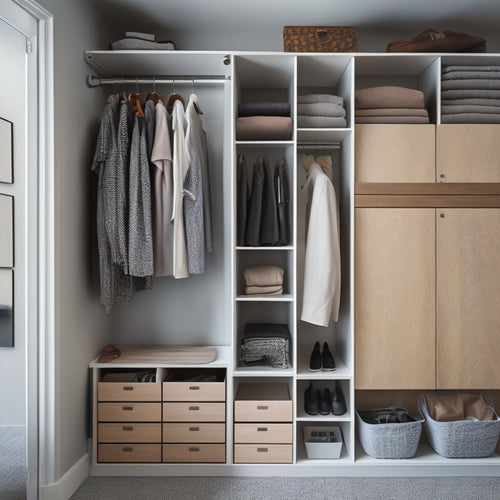
7 Best Compact Closet Storage Ideas for Tiny Homes
You're looking for compact closet storage ideas to maximize your tiny home's space. Start by doubling your hanging sp...
-

Top Digital Tools for Home Organization Success
To achieve home organization success, you'll want to tap into the power of digital tools. Start with decluttering and...
-
Why College Students Need Smart Storage Systems
As you navigate the challenges of college life, you'll quickly realize that a smart storage system is essential to tr...
