
7 Simple DIY Home Office Organization Hacks
You can quickly transform your cluttered home office into a productive space by implementing a few simple DIY organization hacks. Start by decluttering your desk, then create a functional filing system with designated files and color-coded folders. Make the most of your vertical space by arranging shelves and containers strategically. Utilize hidden storage containers, such as decorative bins, to conceal clutter. Designate specific workspaces for tasks and optimize your cord organization with labels and accessible storage. Finally, repurpose old furniture pieces to create functional office essentials. With these hacks, you'll be well on your way to a more organized, focused, and inspired workspace - and there's even more you can do to take it to the next level.
Key Takeaways
• Utilize vertical space by arranging shelves and containers strategically to maximize storage and reduce clutter.
• Implement a cord organization system using labels, stickers, or color-coding to keep cords tidy and easily accessible.
• Repurpose old furniture or items into functional office essentials, such as turning a bookshelf into a desk organizer.
• Create a filing system with designated files and folders, and use color-coding for categorization to stay organized and focused.
• Designate task-specific workspaces to improve productivity and reduce distractions, containing clutter and promoting a sense of control.
Declutter Your Desk in Minutes
Tackle your messy desk by sorting items into three piles: keep, donate/recycle, and toss, and then get rid of anything that doesn't belong in your workspace. Be ruthless – if you haven't used it in the past month, it's probably safe to let it go.
Once you've purged your desk, organize the 'keep' items into categories, such as papers to file, office supplies, and electronics.
Next, focus on cable management. Use cable ties or clips to keep cords organized and untangled. This won't only declutter your desk but also make it easier to find what you need when you need it.
Consider investing in a desk organizer or tray to corral small items like paperclips and pushpins. Finally, tidy up your desk drawers by storing items you don't use frequently, like paperwork or infrequently used office supplies.
Create a Functional Filing System
Set up a filing system that works for you by designating specific files or folders for different types of documents, such as projects, receipts, and contracts. This will help you quickly locate the documents you need, saving you time and reducing stress.
Use color-coded folders to categorize your documents, making it easy to distinguish between different types of files. You can also implement digital organization by scanning and storing your documents electronically, freeing up physical storage space.
Organize your physical files using drawer dividers to separate different categories of documents. Binder clips can help keep related documents together, making it easy to find what you need. Consider setting up a filing cabinet or file organizer near your workspace to keep your files within easy reach.
Make the Most of Vertical Space
When it comes to organizing your home office, you're likely thinking about the floor space, but don't forget to look up!
You can greatly increase your storage capacity by making the most of your vertical space.
Maximize Shelf Capacity
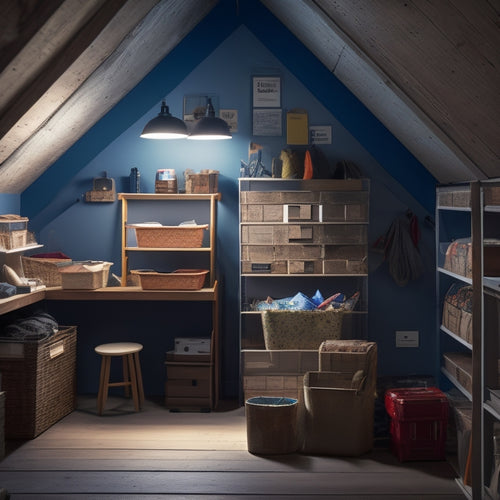
By strategically arranging your shelves and storage containers, you can access hidden capacity and make the most of your home office's vertical space. Effective shelf organization is key to maximizing storage capacity. Start by categorizing items into groups, such as office supplies, books, and paperwork. Then, assign a designated shelf or section for each group. This will help maintain a sense of order and make it easier to find what you need.
To further optimize shelf space, consider using DIY shelf dividers or organizing accessories like baskets, bins, or stackable containers. These space-saving solutions can help keep similar items together, prevent clutter, and make the most of your shelf's vertical space.
For example, use a shelf divider to separate books from office supplies or store paperwork in a labeled bin. By implementing these simple hacks, you can create a more organized, functional, and efficient home office that boosts your productivity and reduces stress.
Optimize Wall Storage
Optimize Wall Storage (Make the Most of Vertical Space)
Take advantage of your office's vertical space by utilizing walls to store items that are less frequently used, freeing up floor and shelf space for more essential items. This will help keep your workspace clutter-free and organized.
One effective way to do this is by installing floating shelves. These can hold items like binders, books, or decorative pieces, keeping them out of the way but still accessible.
Another storage solution is hanging baskets. These can be attached to the wall or the back of a door, providing additional storage for items like office supplies, paperwork, or bags.
For a more functional approach, consider pegboard organization. This involves installing a pegboard on your wall and using hooks to hang items like bags, accessories, or tools.
You can also use magnetic hooks to hang smaller items like scissors, pens, or notes. By optimizing your wall storage, you'll be able to create a more organized, efficient, and productive workspace.
Utilize Hidden Storage Containers
You can cleverly conceal cluttered office supplies and paperwork in decorative storage bins, baskets, or hollowed-out books that double as hidden storage containers. These creative container ideas offer space-saving solutions, keeping your workspace organized and visually appealing.
Stylish storage options like wicker baskets or wooden crates can add a touch of elegance to your home office. Consider repurposing items you already have, like old suitcases, trunks, or even cardboard boxes, to create unique and functional storage solutions.
You can also upcycle old books by hollowing them out and using them as secret compartments for storing small items like paper clips, pushpins, or USB drives. When choosing hidden storage containers, think about the items you need to store and the available space in your office.
Look for containers that fit snugly under your desk, on shelves, or in corners, maximizing your storage capacity while maintaining a clutter-free environment. By incorporating these DIY organization hacks into your home office design, you'll be able to work more efficiently and stay focused on your tasks.
Designate a Workspace for Tasks
Assign a specific area of your home office to each task or project, allowing you to stay focused and avoid clutter from spreading to other areas of the room. This simple hack can greatly improve your task efficiency and productivity.
By designating a specific workspace for each task, you can minimize distractions and stay on track.
Here are a few benefits of designating a workspace for tasks:
Improved workspace layout: Having a designated area for each task helps you create a functional and organized workspace layout, making it easier to navigate and find what you need.
Reduced clutter: By containing each task to a specific area, you can prevent clutter from spreading to other areas of the room, keeping your workspace tidy and organized.
Boosted productivity: With a designated workspace for each task, you can stay focused and avoid multitasking, leading to a significant productivity boost.
Optimize Your Cord Organization
Now that you've designated a workspace for tasks, it's time to tackle the tangled mess of cords that's likely cluttering up your area.
To optimize your cord organization, you'll need to get a handle on cord clutter, figure out a system for labeling and grouping cords, and find ways to stash them out of sight.
Cord Clutter Control Methods
Taming cord clutter is essential to maintaining a functional and visually appealing home office, as tangled cords and cables can quickly turn a workspace into a chaotic mess. You know the feeling - you're trying to focus on a task, but your attention keeps getting diverted by the mess of cords snaking across your desk.
It's time to take control of your cord organization! Here are some simple yet effective cord clutter control methods to get you started:
** Use cable ties or zip ties to bundle cords together, keeping them tidy and preventing tangles.
** Invest in a cord organizer or cable management box to store and conceal cords when not in use.
** Route cords behind your desk or along the baseboards to keep them out of sight and reduce visual clutter.
Label and Group Cords
By bundling and storing your cords, you've taken the first step towards a clutter-free workspace; next, label and group them to guarantee you can easily identify and access the cords you need.
Effective cord management and cable organization rely on a clear system, making it effortless to find the right cord when you need it.
To achieve this, start by wire grouping - categorize your cords by type, device, or frequency of use. Then, use cord labeling to identify each cord clearly. You can use labels, stickers, or even color-coding to differentiate between them. This way, you'll avoid the frustration of searching for a specific cord or dealing with tangled messes.
As you label and group your cords, consider the layout of your workspace. Store frequently used cords in easy-to-reach locations, and reserve less accessible areas for less frequently used ones. By implementing this system, you'll streamline your cord organization, saving time and reducing stress in the process.
Hidden Cord Storage
You can conceal cords from view by incorporating hidden storage solutions into your workspace design, keeping your desk surface clutter-free and visually appealing. This is especially important for cord-heavy devices like computers and charging stations.
By implementing effective cable management and cord concealment strategies, you'll create a more organized and peaceful work environment.
Here are some creative ways to hide cords:
-
Cord organizers with adhesive backs: Attach these to the underside of your desk or a nearby wall to keep cords tidy and out of sight.
-
Decorative cord concealment boxes: Use these to store cords and cables in a stylish, compact container that blends into your workspace decor.
-
Cable management trays: Install these under your desk or along a wall to route cords and cables discreetly, keeping your workspace clutter-free.
Repurpose Old Furniture Pieces
Give new life to outdated furniture pieces by transforming them into functional and space-saving office essentials. You can turn an old bookshelf into a desk organizer, complete with compartments for paperwork, office supplies, and even a built-in keyboard tray. With a little creativity, you can create a furniture makeover that not only adds storage but also becomes a conversation starter.
Furniture upcycling is an excellent way to get creative with organization solutions. For instance, an old dresser can be repurposed as a file cabinet, or an old ladder can become a bookshelf. You can even use an old door as a desk or a room divider. By thinking outside the box, you can create unique and functional storage solutions that also add a touch of personality to your home office.
Frequently Asked Questions
How Do I Stay Motivated to Maintain My Organized Home Office?
"You effortlessly establish energetic habits by creating routines, enlisting an accountability partner, and setting specific goals. Treat yourself to a reward system, and you'll stay motivated to maintain your organized space, feeling focused and fulfilled."
Can I Organize My Home Office on a Very Limited Budget?
You can organize your home office on a very limited budget by repurposing items you already own, shopping secondhand, and getting creative with budget-friendly storage solutions and space-saving ideas that maximize functionality.
How Often Should I Clean and Organize My Home Office?
"You're not a tidy person, but you can be! Create a cleaning schedule to maintain your space, setting aside time daily to declutter and organize, and weekly to deep clean, ensuring your productivity hub stays efficient and inspiring."
What if I Have a Very Small Home Office With Limited Space?
You're working with a tiny home office? No problem! You'll need creative storage ideas to maximize space. Invest in multi-functional office furniture that serves double duty, like a desk with built-in shelving or a file cabinet with a printer tray.
Can I Involve My Family Members in the Organization Process?
You're the conductor of your family orchestra, and involving them in organization is like harmonizing diverse instruments - it requires teamwork. Assign tasks, brainstorm creative storage solutions together, and watch your small space symphony come to life!
Related Posts
-
Unlock Attic Storage Potential With Online Guides
You're sitting on a treasure trove of storage space, right above your head! Reveal your attic's hidden potential by a...
