
Why Kitchen Clutter Holds You Back
Your kitchen mess is covertly holding you back, affecting your well-being in ways you may not even realize. It creates ideal breeding grounds for bacteria, posing health risks, and increases safety hazards like slippery floors and overcrowded countertops. Clutter also steals your time and energy, making meal prep and cooking a stressful experience. By tackling kitchen mess, you can break free from the cycle of stress and anxiety, and reveal a more organized, efficient, and peaceful space. As you explore the hidden dangers of kitchen mess, you'll discover how a clutter-free kitchen can transform your daily life.
Key Takeaways
• Cluttered kitchens pose hidden dangers to health, safety, and finances, increasing injury risks and ideal breeding grounds for bacteria.
• Kitchen clutter negatively impacts mental clarity, causing anxiety, mental fatigue, and cognitive overload, affecting overall wellbeing.
• Cluttered kitchens waste time and energy, making meal prep and cooking more difficult, and increasing the likelihood of takeout or dining out.
• Emotional attachment to items can hinder decluttering efforts, making it essential to consider emotional attachment when organizing kitchen space.
• A clutter-free kitchen promotes relaxation, improved mental clarity, and better overall mental health, enhancing quality of life.
Hidden Dangers of Kitchen Clutter
Cluttered kitchens can harbor hidden dangers that threaten your health, safety, and even your wallet, and you may not even realize it. You might think that a messy kitchen is just an eyesore, but it can lead to serious consequences. For instance, safety hazards lurk in every corner, from slippery floors to overcrowded countertops. One wrong move, and you could end up with a serious injury.
Moreover, a cluttered kitchen provides the perfect breeding ground for bacteria. Crumbs, spills, and unclean surfaces create an ideal environment for germs to thrive. This can lead to food poisoning, which can be particularly dangerous for vulnerable individuals like the elderly, young children, and those with compromised immune systems.
Storage Solutions for Tiny Kitchens
Your tiny kitchen demands creative storage solutions to maximize every inch of available space and keep your kitchen organized.
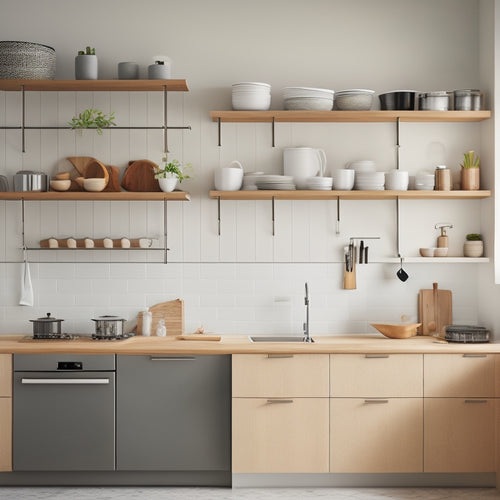
To achieve this, you need to think vertically and horizontally. Install shelves, hooks, or a pegboard on walls and ceilings to hang items like pots, pans, utensils, and even spices. This will free up counter space and make the most of your kitchen's vertical space.
For space saving ideas, consider using multi-functional furniture like a kitchen cart with storage or a sink with built-in storage. You can also use stackable containers, baskets, and bins to store dry goods, cleaning supplies, and other essentials. Labeling each container will help you quickly find what you need, making meal prep more efficient.
When it comes to organization tips, prioritize the items you use most frequently and store them in easy-to-reach locations. Keep similar items together, such as all your baking supplies in one area. By implementing these storage solutions, you'll be able to cook, prep, and clean with ease, even in the smallest of kitchens.
Mindful Meal Prep Made Easy
When you're mindful about meal prep, you're more likely to create healthy, stress-free habits that save you time and energy.
By prepping in advance, you'll avoid last-minute scrambles and wasted ingredients.
Prep in Advance
By dedicating a few hours each week to meal prep, you can transform the chaos of your kitchen into a haven of efficiency. This mindful approach to cooking allows you to take control of your time management, prioritizing tasks, and streamlining your workflow. With a clear plan, you can allocate specific times for meal prep, grocery shopping, and cooking, ensuring that every minute counts.
Effective organization tips are essential to making meal prep a success. Start by categorizing your recipes, grouping similar ingredients, and creating a shopping list. This helps you avoid food waste and reduces last-minute trips to the store. Label and date your prepped meals, making it easy to grab-and-go when you need to.
Designate a specific area in your kitchen for meal prep, keeping all necessary utensils and ingredients within arm's reach. By implementing these strategies, you'll be able to cook healthier meals, reduce stress, and enjoy a more organized kitchen. With meal prep, you'll be amazed at how much time and energy you'll save, allowing you to focus on the things that matter most.
Simplify Your Space
Now that you've streamlined your meal prep process, it's time to turn your attention to the space where all the magic happens - your kitchen. Simplifying your space is essential for mindful meal prep, and it starts with a minimalist decor.
Get rid of any unnecessary items that clutter your countertops and walls. A clean slate will help you stay focused and avoid distractions.
Next, focus on efficient organization. Assign a home for each item in your kitchen, and make sure everything is easily accessible. This means storing frequently used items in easy-to-reach locations and reserving higher shelves for less-used items.
Implement a 'zone' system, where you designate specific areas for specific tasks, such as a prep zone, cooking zone, and cleaning zone. This will help you stay organized and avoid clutter buildup.
Decluttering for a Clear Mind
Research suggests that cluttered environments can negatively impact your mental clarity, making it essential to declutter your kitchen to achieve a clearer mind. A cluttered kitchen can lead to feelings of anxiety and overwhelm, making it difficult to focus on meal preparation and other daily tasks. By decluttering your kitchen, you can create a more peaceful and organized space that promotes mental clarity.
To achieve mindful organization, start by categorizing items into three piles: keep, donate/sell, and discard. Be honest with yourself about each item, and consider the emotional attachment you may have to certain objects. Ask yourself if keeping an item will truly bring you joy or serve a purpose. If not, consider letting it go.
Kitchen Chaos Affects Wellbeing
As you navigate your kitchen, you're likely aware of the overwhelming feeling that comes with cluttered countertops and disorganized drawers.
But did you know that this kitchen chaos is also taking a toll on your wellbeing?
It's increasing your mental load and stress levels, making it harder for you to relax and focus.
Mental Load Increases
Cluttered kitchens silently weigh you down, amplifying your mental load and making it increasingly difficult to focus on the tasks at hand. The constant visual stimulation of cluttered countertops, overflowing cabinets, and scattered utensils contributes to cognitive overload, making it harder for you to process information and make decisions.
This mental fatigue leads to a productivity drain, causing you to feel sluggish and unmotivated.
As you navigate your kitchen, you're constantly bombarded with stimuli, making it challenging to prioritize tasks and stay focused. This is because clutter competes for your attention, drawing your gaze away from the task at hand. The mental effort required to filter out distractions and stay on track is exhausting, leaving you feeling drained and overwhelmed.
Some common signs of a clutter-induced mental load include:
- Difficulty concentrating on a single task
- Feeling anxious or irritable when cooking or preparing meals
- Struggling to make decisions about what to cook or how to organize your kitchen
- Feeling like you're constantly 'on' and can't relax in your kitchen space
Stress Levels Rise
Stress Levels Rise
Kitchen chaos takes a toll on your wellbeing, triggering a stress response that can manifest physically, emotionally, and mentally. When your kitchen is cluttered, you're more likely to feel overwhelmed, anxious, and irritable. This stress can lead to a range of negative consequences, from headaches and fatigue to digestive problems and mood disturbances.
| Clutter Consequences | Organizational Benefits |
|---|---|
| Increased stress levels | Reduced anxiety and overwhelm |
| Decreased productivity | Improved focus and efficiency |
| Poor time management | Better prioritization and time allocation |
| Unhealthy eating habits | Healthier meal planning and preparation |
| Mental fatigue | Improved mental clarity and energy |
Freeing Up Space and Time
By streamlining your kitchen, you'll regain control over a substantial chunk of your daily schedule and free up physical space that's currently suffocating under clutter. This, in turn, will allow you to focus on more important aspects of your life. Effective time management is vital in today's fast-paced world, and a cluttered kitchen can be a significant obstacle.
When your kitchen is organized, you'll find that you're more productive and efficient. Here are just a few ways a clutter-free kitchen can benefit you:
-
You'll spend less time searching for ingredients and cooking utensils, allowing you to prepare meals more quickly.
-
You'll be more likely to cook at home, saving you money and time that would be spent on takeout or dining out.
-
You'll have more free time to focus on other activities, such as exercise, hobbies, or spending time with loved ones.
- You'll reduce stress and feel more in control of your daily routine.
Frequently Asked Questions
How Do I Maintain My Kitchen's Organization After the Initial Declutter?
"As you stand at the helm of your newly organized kitchen, remember that maintaining order is a voyage, not a destination. Implement storage solutions, establish kitchen routines, and create a labeling system to chart your course, while sticking to a cleaning schedule to keep clutter at bay."
Can I Declutter My Kitchen if I'm Not a Minimalist?
You can declutter your kitchen without being a minimalist by debunking decluttering misconceptions and embracing non-minimalist solutions that prioritize personalized organization and practical decluttering methods tailored to your lifestyle and needs.
What Are Some Creative Ways to Repurpose Kitchen Items?
You're stuck in a sea of kitchen clutter, yet you crave creativity. Upcycle containers into planters or pen holders, and repurpose utensils as DIY plant markers or photo displays, giving old items a fresh, functional life.
How Often Should I Declutter My Kitchen to Maintain Order?
You should declutter your kitchen every 1-3 months to maintain order, depending on usage. Regular decluttering helps you stay organized, reduces stress, and saves time. Try the "one in, one out" rule and designate a spot for frequently used items.
Can a Cluttered Kitchen Affect My Relationships With Family and Friends?
"Blood is thicker than water," but a cluttered kitchen can strain relationships. You'll feel the emotional impact of a cluttered space, leading to communication breakdowns with family and friends in your messy environment.
Related Posts
-
Tiny Kitchen Big Storage: Space-Saving Ideas
You can transform even the smallest of kitchens into a haven of functionality and style by utilizing every inch of av...
